Yves Lange · 1 September 2026
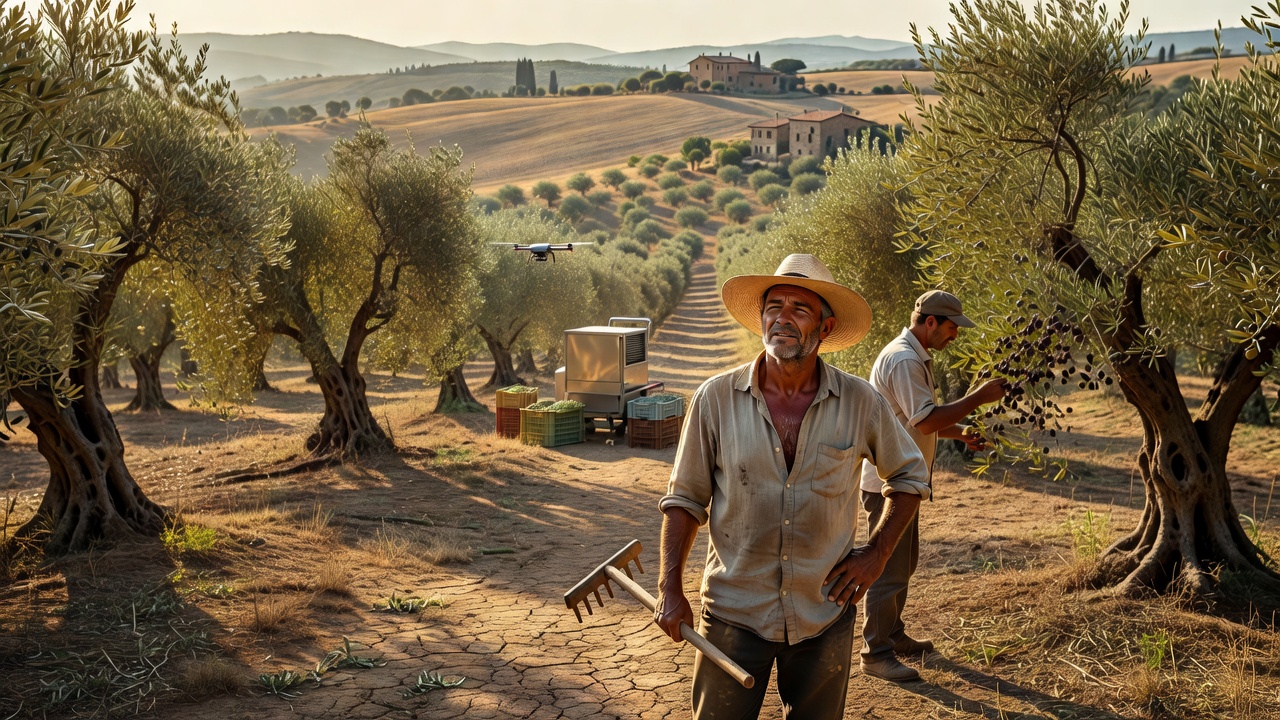
The ongoing heatwave in Tuscany has significantly impacted the region's olive oil production, prompting farmers to adopt new harvest strategies. With temperatures consistently exceeding 35 degrees Celsius, traditional methods are proving insufficient to maintain quality and yield.
Effects of the Heatwave on Olive Production
Olive trees in the region have experienced substantial stress due to prolonged high temperatures and reduced rainfall. This has led to earlier ripening of olives and a decrease in oil content within the fruit. Experts note that the heat can cause the olives to drop prematurely, reducing the overall harvest volume. Local agricultural associations report that yields could be down by up to 20 percent compared to average years. Additionally, the quality of the oil may be affected, with potential changes in flavor profiles and acidity levels.
Farmers are monitoring their groves closely, using soil moisture sensors and weather data to predict optimal picking times. The heatwave, which began in early summer, shows no signs of abating, forcing a reevaluation of long-standing practices in olive cultivation.
New Strategies for Olive Harvesting
In response to these challenges, producers are implementing innovative techniques. One approach involves harvesting olives earlier than usual to preserve their integrity before excessive heat causes damage. This requires careful timing and additional labor resources. Some estates are experimenting with shade nets to protect trees during peak heat hours, although this is costly and not feasible for all.
Irrigation systems are being upgraded to provide more efficient water delivery, helping to mitigate drought stress. Research institutions in Italy are collaborating with farmers to develop heat-resistant olive varieties that can better withstand future climate extremes. Workshops and training sessions are being organized to educate growers on these new methods.
These adaptations aim to sustain the renowned Tuscan olive oil industry amid changing environmental conditions. While challenges remain, the proactive measures demonstrate resilience in the face of climate change.